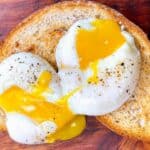
Sous Vide Soft Boiled Eggs (in Shell)
Tired of guessing when your soft-boiled eggs are just right? This Sous Vide Soft-Boiled Eggs recipe takes the uncertainty out of the process, delivering perfectly runny yolks and firm, tender whites every time. Using the sous vide method, you can cook eggs directly in their shells with precise temperature control.
Servings: 2
Calories: 252kcal
Equipment
- 1 Sous Vide Cooker
- Slotted spoon
Ingredients
- 8 pre-pasteurized par-boiled eggs in shell
- salt and pepper to taste
Instructions
- Gently par-boil pre-pasteurized eggs for 3 minutes in boiling water.
- While eggs are boiling, prepare a water bath by filling a large container or pot with water. Attach your sous vide machine or immersion circulator and set the temperature to 145°F (63°C). *Refer to Food Safety below.
- Remove the eggs from the boiling water and place in an ice bath for one minute.
- Carefully place the par-boiled eggs into the water bath, making sure they are fully submerged in the water. Allow the eggs to cook in the sous vide water bath for 45 minutes, ensuring a consistent and precise temperature for perfectly cooked soft-boiled eggs.
- To peel the eggs, gently tap the bottom of each egg onto a hard surface to create a crack in the shell. Then, peel away the outer top of the shell to expose a small hole at the top of the egg.
- Tilt the cracked egg over a bowl, allowing the soft-boiled egg to slide out. Spoon out the tight white egg from the loose membrane. Serve immediately.
Notes
Food Safety Note Consuming undercooked or raw eggs may increase the risk of foodborne illness, especially for individuals with weakened immune systems, pregnant women, young children, and the elderly. For safety, use pasteurized eggs and extend the cooking time. FDA Egg Safety Page
Storage Store soft-boiled eggs in the refrigerator for up to 2 days.
Freeze This dish is not freezer friendly.
Reheat Submerge the soft boiled eggs in warm water for 5-10 minutes.
Top Tips If you prefer your whites a little whiter after cooking, you can slide your egg into simmering water on the stove for about a minute to poach it.
Nutrition The provided nutrition information is only an estimate.
Adjustments Cooking time may need to be adjusted based on the geography of the area (high vs. low elevation), cookware (stoneware vs traditional bakeware), and outdoor temperature if grilling.
Nutrition
Calories: 252kcal | Carbohydrates: 1g | Protein: 22g | Fat: 17g | Saturated Fat: 6g | Polyunsaturated Fat: 3g | Monounsaturated Fat: 6g | Trans Fat: 0.1g | Cholesterol: 655mg | Sodium: 250mg | Potassium: 243mg | Sugar: 1g | Vitamin A: 950IU | Calcium: 99mg | Iron: 3mg
