

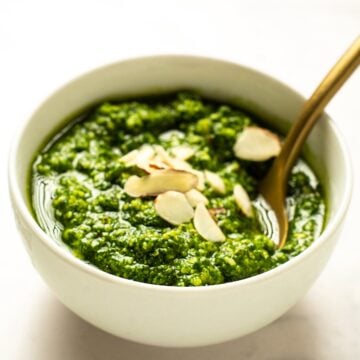
Basil Pesto Recipe Without Pine Nuts is an easy homemade pesto recipe with 5-minute prep and fresh basil flavor. Sliced almonds replace traditional pine nuts while Parmigiano-Reggiano, garlic, and extra virgin olive oil create a rich, spoonable pesto for pasta, sandwiches, chicken, and more.
If you like this basil pesto without pine nuts recipe, you may also love our Sundried Tomato Pesto, Basil and Arugula Pesto, or this Creamy Pesto Pasta.
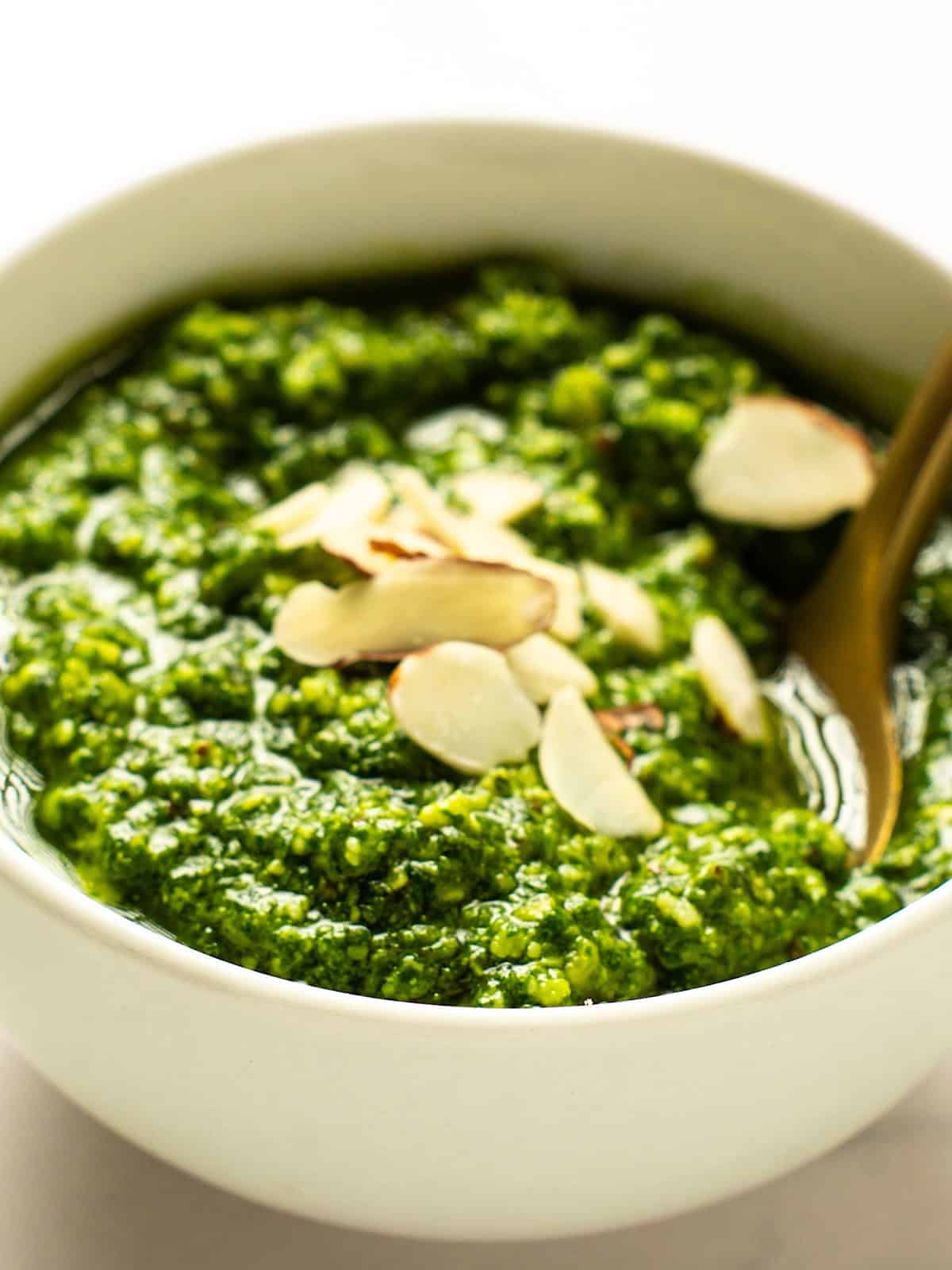
Basil Pesto Recipe Without Pine Nuts at a Glance 🔎
- 🕒 Prep Time: 5 minutes
- 👥 Servings: About 1 cup
- 🔥 Cook Method: Food Processor
- 🍽️ General Category: Italian-Inspired Sauce
- 👩🍳 Pair With: Pasta, grilled chicken, crostini
- ⭐ Difficulty Level: Easy
Need an AI‑Friendly Version? Summarize or save this recipe.
Disclaimer: AI summaries may vary and are not guaranteed to match the original recipe provided here.
We use sliced almonds because they process easily without toasting, and their mild flavor keeps fresh basil at the center of the finished pesto. ~Jami
Jump to:
Why We Love This Recipe
- Easy Pine Nut Alternative: Sliced almonds are easy to find and give the pesto body and mild nuttiness without overpowering the fresh basil.
- Ready in 5 Minutes: Everything comes together quickly in a food processor with no cooking or toasting required.
- Fresh Basil Flavor: Using basil as the only herb keeps this version fresh and basil-forward, while lemon balances the richness of the cheese and olive oil.
- Easy to Use: One batch can dress pasta, top grilled chicken or fish, spread onto sandwiches, or add flavor to vegetables.
Key Ingredients
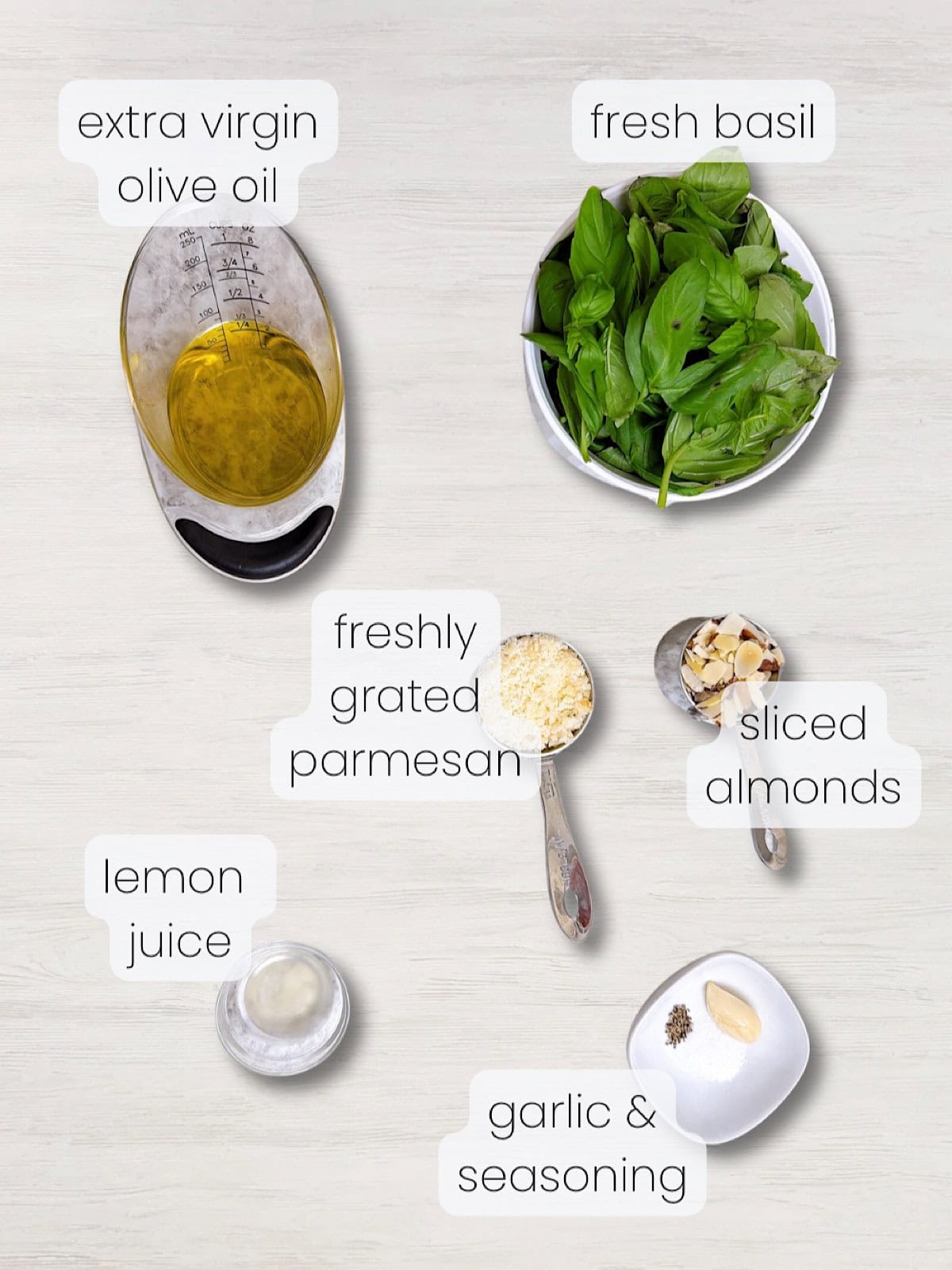
- Fresh Basil: Look for basil with bright green, tender leaves and avoid bunches with dark or bruised spots. Make sure the leaves are dry before adding them to the food processor since excess water can thin the pesto and dilute its flavor.
- Sliced Almonds: Sliced almonds replace the pine nuts in this recipe and break down easily without requiring an extra toasting step. Their relatively mild flavor works well here because the goal is still a basil-forward pesto rather than an almond sauce.
- Parmigiano-Reggiano: Freshly grate the cheese rather than using shelf-stable grated Parmesan. Parmigiano-Reggiano adds saltiness and savory depth, so taste the finished pesto before adjusting the salt.
- Extra Virgin Olive Oil: Since the oil remains uncooked, its flavor comes through clearly. Use an extra virgin olive oil you enjoy, and add a little more at the end only if you need to loosen the consistency.
- Garlic: One clove gives the pesto a milder garlic flavor, while two make it considerably more assertive. We recommend starting with one if your garlic cloves are particularly large since you can always add more after tasting.
- Fresh Lemon Juice: Lemon isn't meant to make the pesto taste lemony. A small amount of acidity balances the olive oil, almonds, and cheese and gives the finished pesto a fresher finish.
A full ingredient list with exact measurements can be found in the recipe card below.
Substitutions & Variations
- Sliced Almonds: Walnuts can replace the sliced almonds for a richer, earthier pesto. Keep in mind that walnuts have a more noticeable flavor and can sometimes have a slightly bitter finish.
- Parmigiano-Reggiano: Pecorino Romano can be substituted for some or all of the Parmigiano-Reggiano. Because Pecorino is sharper and saltier, taste the pesto before adding additional salt.
- Fresh Lemon Juice: The lemon can be reduced or omitted if you prefer a pesto with less acidity. Taste before making the adjustment since a little acid helps balance the richness of the other ingredients.
- Extra Garlic: Use two garlic cloves for a stronger garlic flavor or stick with one for a milder pesto that keeps the basil more prominent.
- Textured Pesto: Use short pulses and stop processing as soon as everything comes together for a more rustic texture with small pieces of basil and almond still visible.
How To Make Basil Pesto Without Pine Nuts
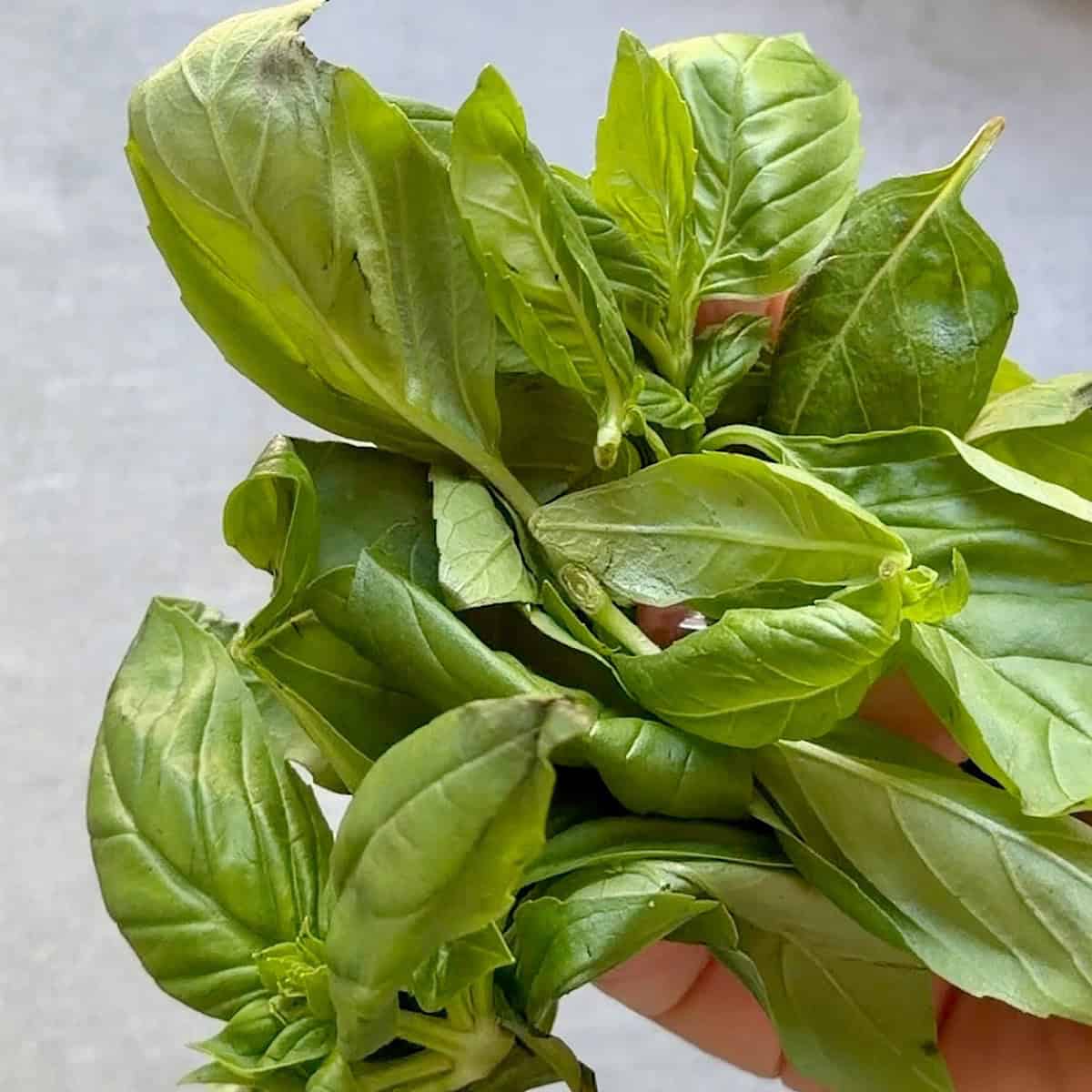
STEP ONE: Prepare the Basil
Wash the basil only if needed, then dry it thoroughly before measuring. Remove any tough stems and pack the leaves loosely into the measuring cup.
Moisture left on the basil can make the pesto watery, so a salad spinner or clean kitchen towel works well for drying larger amounts.
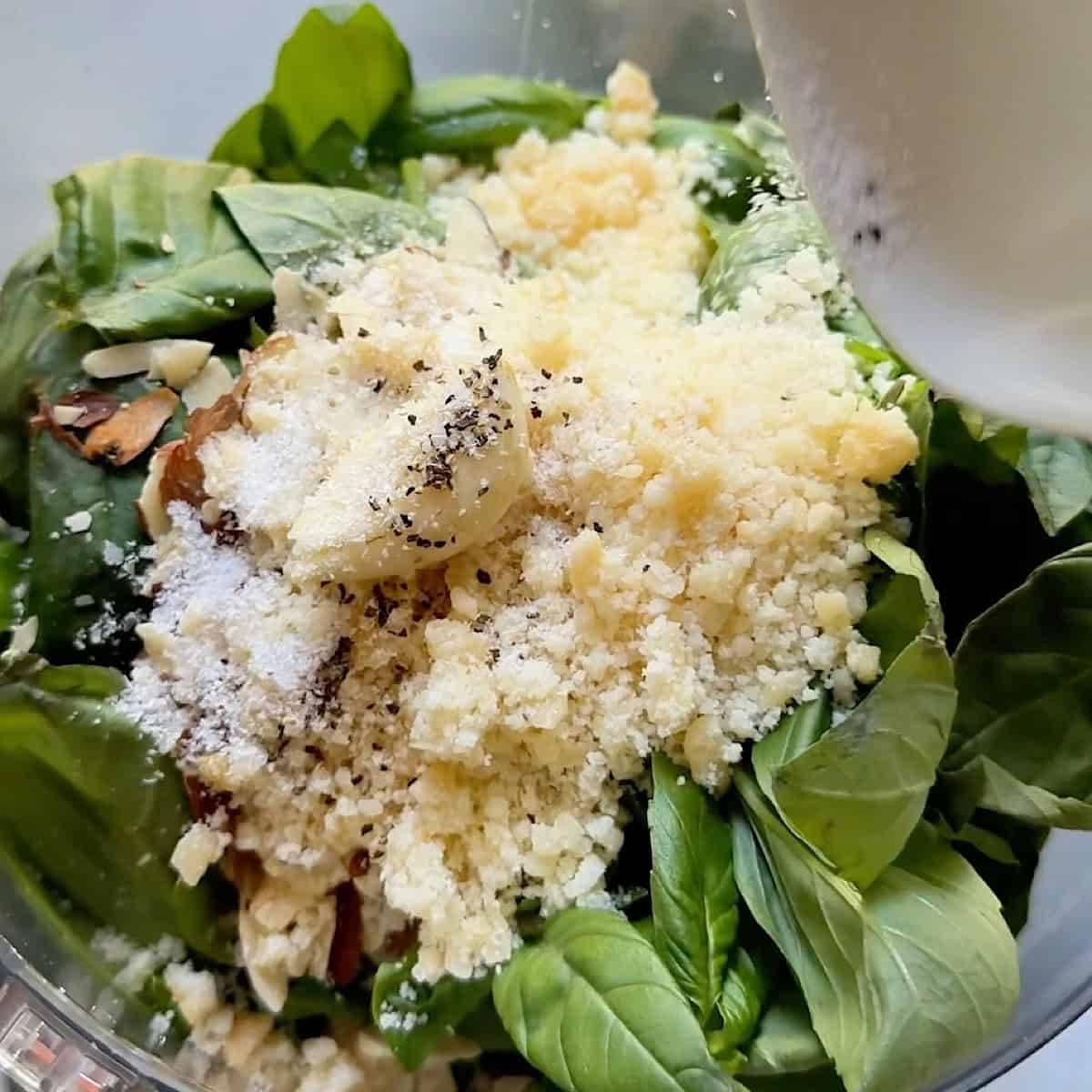
STEP TWO: Pulse the Pesto Ingredients
Add the basil, sliced almonds, Parmigiano-Reggiano, garlic, lemon juice, kosher salt, and black pepper to the food processor.
Pulse rather than letting the machine run continuously. Stop when the basil and almonds are finely chopped but still have some visible texture, scraping down the sides as necessary.
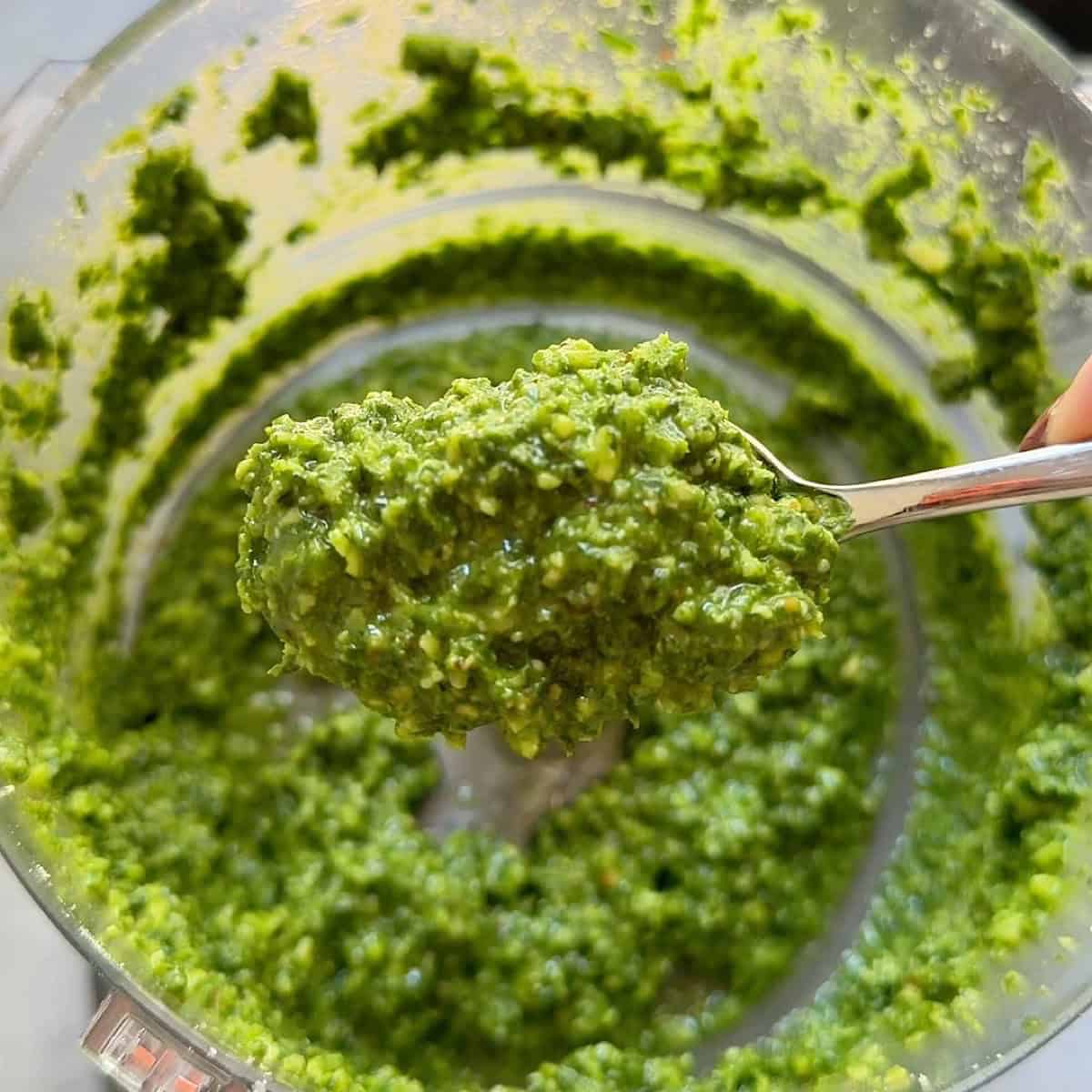
STEP THREE: Add the Extra Virgin Olive Oil
With the food processor running, slowly drizzle in the extra virgin olive oil. Stop once the pesto is cohesive and spoonable rather than continuing to process it into a completely smooth purée.
We prefer to stop and check the consistency before adding extra oil because it's easy to thin pesto but difficult to thicken it again.
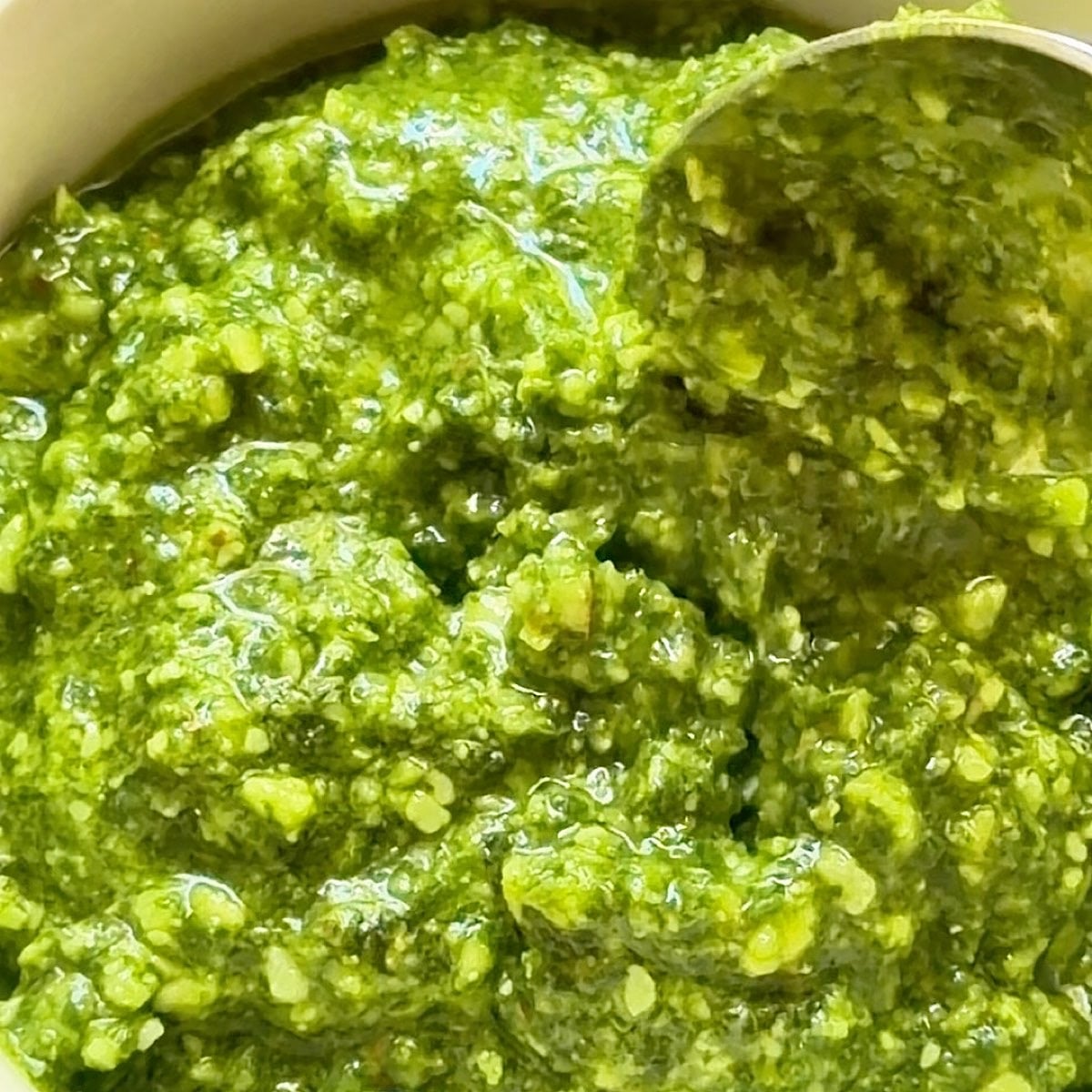
STEP FOUR: Taste and Adjust
Taste the pesto before making any adjustments. Add more salt, garlic, or lemon only if needed, keeping in mind that Parmigiano-Reggiano already contributes saltiness.
For pasta, you can leave the pesto fairly thick and loosen it later with warm pasta water rather than adding more olive oil now.
Save This Recipe 💌
Expert Tips for Success
👩🍳Jami's Pro Tips: Want to take this recipe to the next level? Check out my expert tips below for the best flavor, texture, and meal prep hacks!
✔️ DO Dry the basil thoroughly before processing so excess water doesn't dilute the pesto.
✔️ DO Use sliced almonds so they break down easily.
✔️ DO Pulse the ingredients instead of continuously processing them to maintain some texture.
❌ DO NOT Automatically add more olive oil if you're using the pesto for pasta. Pasta water can loosen it when you're ready to serve.
Storage
Transfer pesto to an airtight container and refrigerate for up to 4 days. Smoothing the surface and covering it with a thin layer of olive oil can help limit exposure to air and slow browning. For longer storage, freeze pesto in small portions or an ice cube tray, then transfer the frozen portions to a freezer-safe container; thaw in the refrigerator before using.
Basil Pesto Without Pine Nuts Recipe FAQs
Almonds, walnuts, cashews, pistachios, and certain seeds can all replace pine nuts in pesto. This recipe uses sliced almonds because their mild flavor complements basil and Parmigiano-Reggiano, while their thin shape makes them easy to process without soaking or toasting.
No. Pine nuts are traditional in pesto Genovese, but you can make a pesto-style basil sauce using other nuts or seeds. Changing the nut changes the flavor and texture somewhat, which is why this recipe uses mild sliced almonds rather than a strongly flavored nut.
Yes, although the difference depends on the substitute. Almonds are firmer and slightly more noticeable in texture than soft, buttery pine nuts, but their mild flavor allows the basil, garlic, olive oil, and Parmigiano-Reggiano to remain prominent.
More ITALIAN Recipes You'll Love ♥️

Did You Try This Recipe?
Leave a ⭐️⭐️⭐️⭐️⭐️ rating and comment below. Don't forget to share it on Instagram, Facebook, & Pinterest. Thank you! 💛
📖 Recipe
Basil Pesto Without Pine Nuts
Equipment
- Measuring cups and spoons
- Rubber spatula
- Microplane or cheese grater
- Citrus juicer optional
Ingredients
- 2 cups fresh basil leaves (about 2 ounces) packed
- ⅓ cup extra virgin olive oil
- ⅓ cup freshly grated Parmigiano-Reggiano
- ¼ cup sliced almonds
- 1 to 2 garlic cloves
- 1 tablespoon fresh lemon juice
- ½ teaspoon kosher salt
- Pinch freshly ground black pepper
Instructions
- Add the basil, sliced almonds, Parmigiano-Reggiano, garlic, lemon juice, kosher salt, and black pepper to a food processor. Pulse several times until the basil and almonds are finely chopped, stopping to scrape down the sides of the bowl as needed.
- With the food processor running, slowly drizzle in the extra virgin olive oil. Continue processing just until the ingredients come together and the pesto reaches your preferred consistency. Avoid overprocessing if you prefer a pesto with a little texture.
- Taste the pesto and adjust the salt, garlic, or lemon juice as needed. If you prefer a thinner consistency, blend in additional olive oil, 1 tablespoon at a time.
- Use immediately or transfer the pesto to an airtight container. If storing, smooth the surface and cover with a thin layer of olive oil before refrigerating to help reduce browning.
Save This Recipe 💌
Video
Notes
- Use dry basil leaves to keep excess moisture out of the pesto.
- Pulse just until the almonds and basil are finely chopped and the pesto still has some texture.
- Start with one garlic clove and add the second only after tasting.
- Keep the pesto thick for storage, then loosen it as needed when serving.

Jami Powell says
We always have almonds in the refrigerator, so this is one of our favorite go-to pesto recipes for chicken and seafood!