

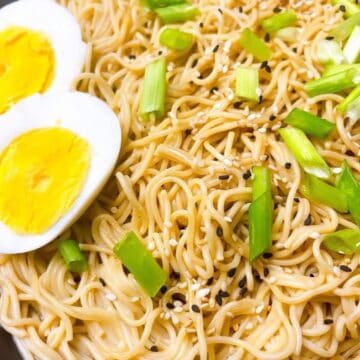
Garlic Ginger Ramen with Eggs is an easy ramen recipe with quick preparation and savory flavor for busy weeknight meals. Garlic and fresh ginger cook briefly in oil before chicken broth and soy sauce reduce into a light sauce that coats the noodles.
If you enjoy easy noodle recipes like this, try our Hot Chili Oil Noodles or Cold Soba Noodle Salad next.
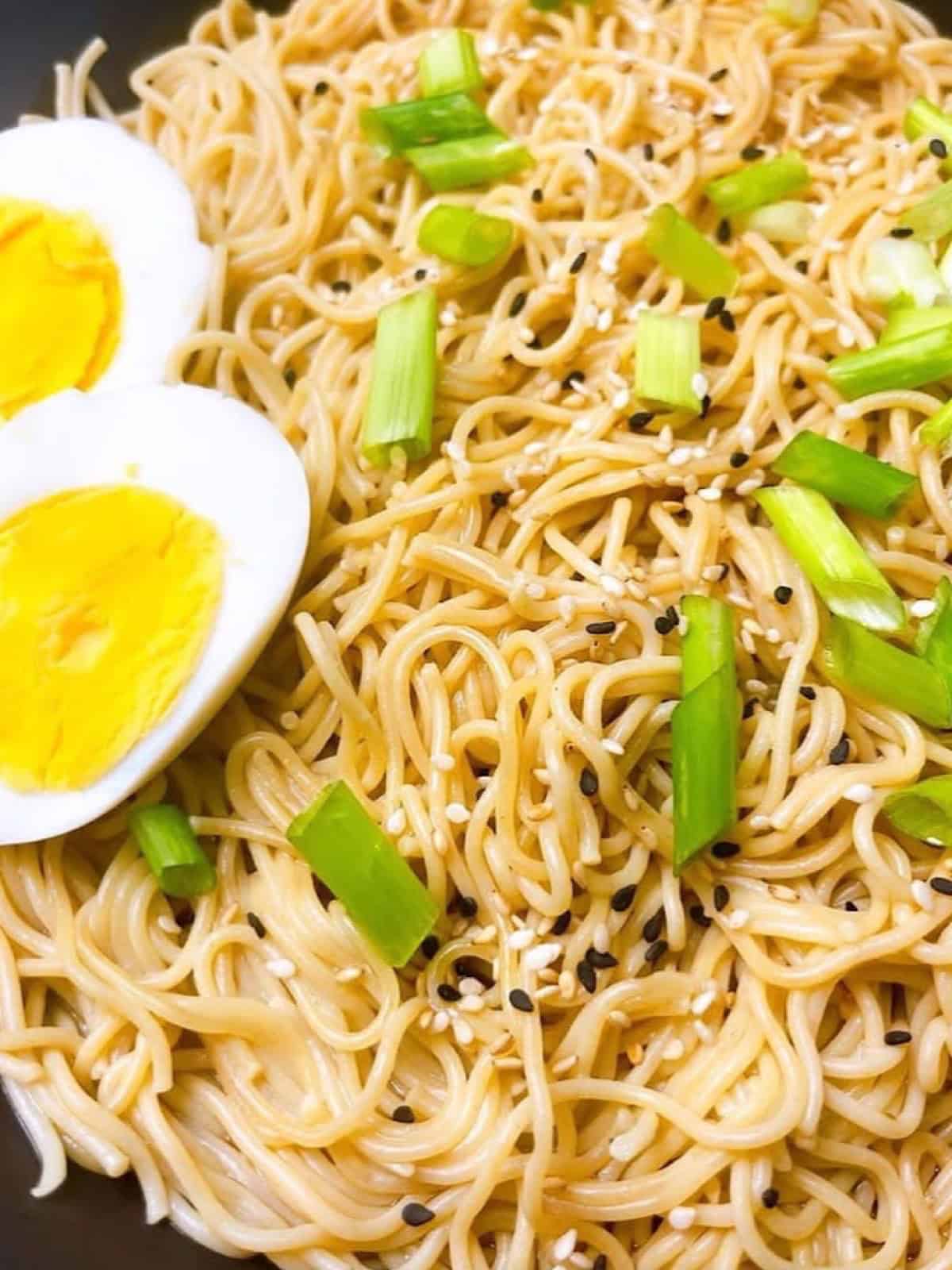
Garlic Ginger Ramen with Eggs at a Glance 🔎
- 🕒 Prep Time: 10 minutes
- ⏱️ Cook Time: 10 minutes
- 👥 Servings: 2
- 🔥 Cook Method: Stovetop
- 🍽️ Cuisine (or General Category): Asian-Inspired
- 👩🍳 Pair With: Crispy Vegetarian Egg Rolls, Thai Shrimp in a Blanket, Sunomono Salad or Spicy Asian Cucumber Salad
- ⭐ Difficulty Level: Easy
Need an AI‑Friendly Version? Summarize or save this recipe.
Disclaimer: AI summaries may vary and are not guaranteed to match the original recipe provided here.
We've found the noodles are best when pulled just before fully soft. They finish in the skillet and stay tender beneath the boiled egg. ~Jami
Jump to:
Why We Love This Recipe
- Ready in 20 Minutes: Using packaged ramen noodles keeps the cooking time short enough for lunch or a quick dinner when you don't want a complicated meal.
- Skip the Seasoning Packet: Garlic, fresh ginger, chicken broth, soy sauce, and sesame oil give you control over the flavor instead of relying on the packet that comes with instant ramen.
- Saucy, Not Soupy: Reducing the broth before adding the noodles creates a light sauce that clings to them rather than leaving a bowl full of broth.
- Easy to Customize: Use instant ramen or rice ramen and adjust the egg from medium-boiled to fully hard-boiled depending on how you like it.
Key Ingredients
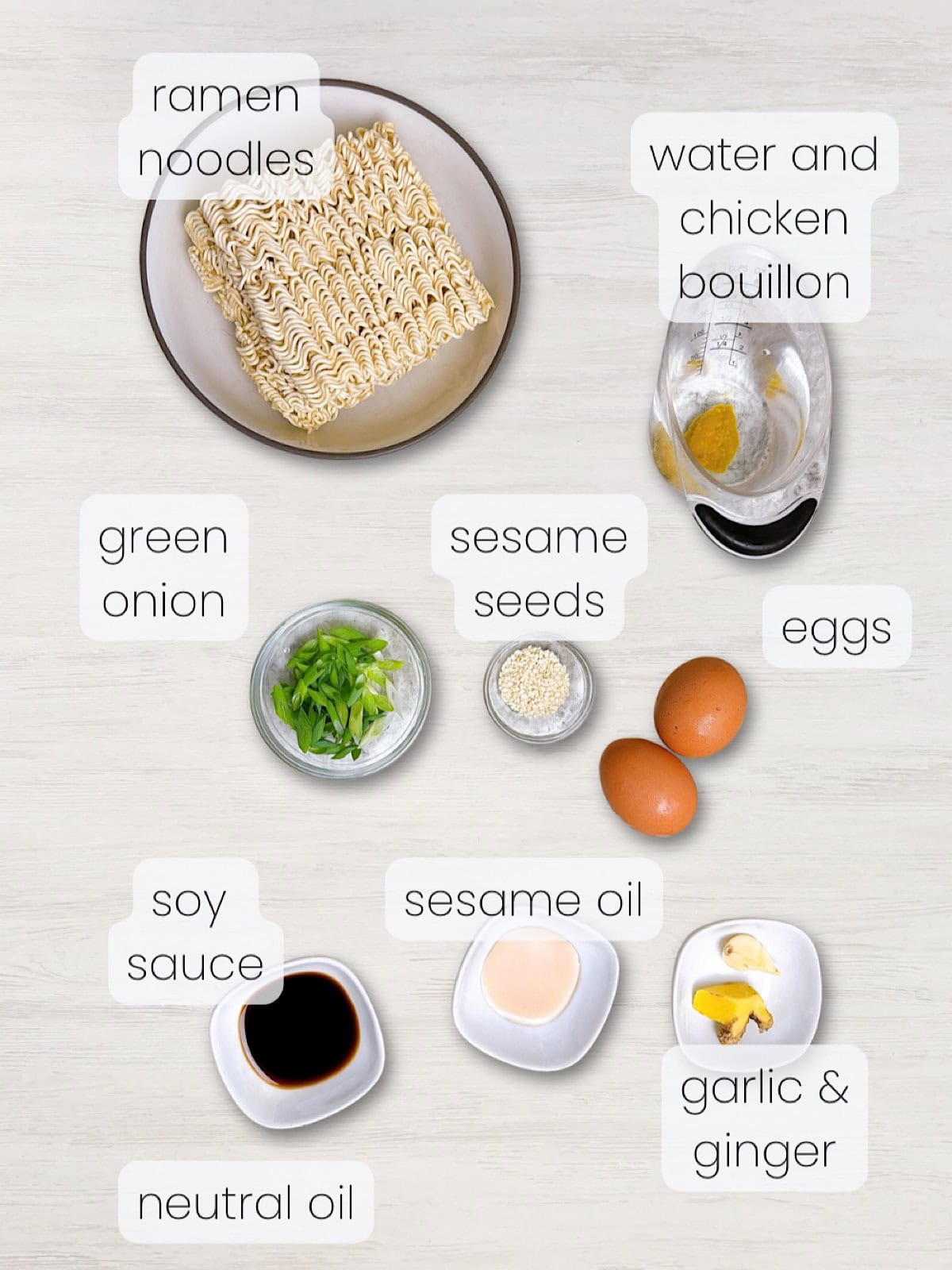
- Ramen Noodles: Either instant ramen or rice ramen works here, which makes this an easy recipe to adapt to what you already have. If you're using packaged instant ramen, discard the seasoning packet. Cook the noodles only until tender because they'll spend another minute or two in the skillet.
- Eggs: Use one or two eggs depending on how you're serving the ramen. An 8-minute egg gives you a slightly soft center, while 11 to 12 minutes produces a hard-boiled egg. One egg, halved over a bowl of noodles, also makes a nice presentation.
- Garlic and Fresh Ginger: Sautéing these briefly in oil before adding the broth builds the flavor base for the sauce. We grate the ginger directly into the skillet with a Microplane so it's very fine and distributes evenly through the noodles.
- Chicken Broth: We use broth prepared from bouillon, but your preferred chicken broth works. The important part is allowing it to reduce in the skillet. You're concentrating the broth into a sauce rather than using it as the base for a traditional brothy ramen.
- Soy Sauce: Soy sauce seasons the reduced broth and adds savory flavor. Since both chicken broth and soy sauce contain salt, taste before adding any additional seasoning. If your broth is particularly salty, a lower-sodium soy sauce is an easy adjustment.
- Toasted Sesame Oil: Add this after removing the skillet from the heat. Toasted sesame oil has a pronounced flavor, so a small amount is enough. Using it as a finishing oil also keeps its toasted aroma from getting lost during cooking.
- Green Onions and Sesame Seeds: Add these after the noodles are plated rather than cooking them into the sauce. The green onions provide a fresh finish against the savory noodles, while sesame seeds add a little texture.
A full ingredient list with exact measurements can be found in the recipe card below.
Substitutions & Variations
- Ramen Noodles: Use instant ramen noodles or rice ramen. If using instant ramen, discard the included seasoning packet and prepare the noodles according to the package directions.
- Chicken Broth: Vegetable broth can be substituted for chicken broth. Because salt levels vary considerably between broth and bouillon products, taste the finished sauce before adding additional salt.
- Soy Sauce: Tamari can be used in place of soy sauce. Check the labels on your noodles and broth as well if you're adapting the entire recipe for a gluten-free diet.
- Flavor: Add cooked bok choy to the finished bowl for vegetables and extra texture. We prefer cooking it separately so it doesn't absorb the small amount of sauce intended for the noodles.
- Spice: Spoon a little chili crisp over the finished ramen if you want some heat. Adding it at the table makes it easy for everyone to control the spice level.
- Budget-Friendly: Basic packaged instant ramen works perfectly well here. Discard the seasoning packet and use the noodles as an inexpensive base for the homemade garlic-ginger sauce.
How To Make Garlic Ginger Ramen with Eggs
STEP ONE: Cook the Eggs
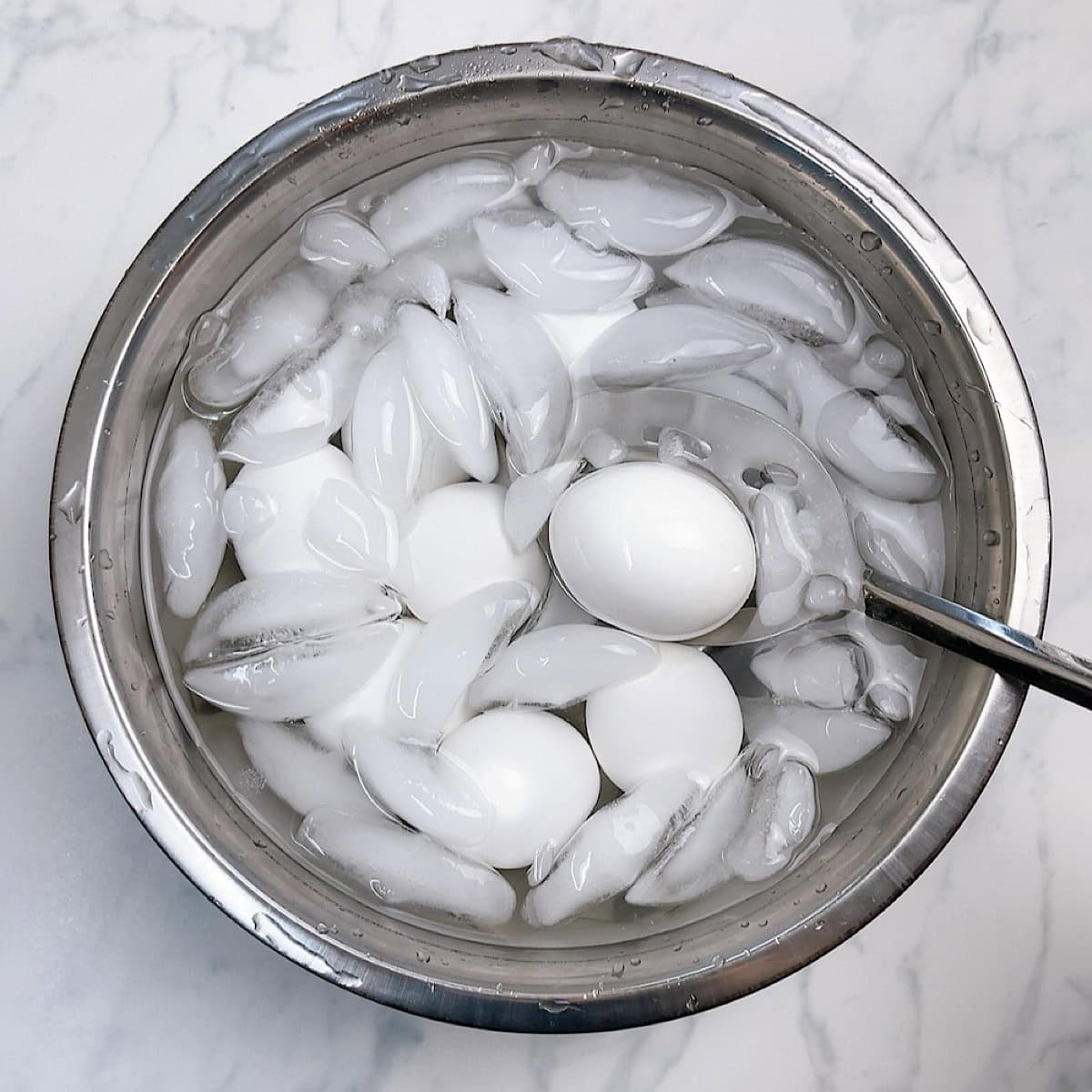
Bring a small saucepan of water to a boil and gently lower in the eggs. Cook for 8 minutes for medium-boiled eggs with slightly soft centers or 11 to 12 minutes for hard-boiled eggs.
Move them directly into ice water for 5 minutes to stop the cooking and make them easier to handle before peeling and halving.
STEP TWO: Cook the Ramen
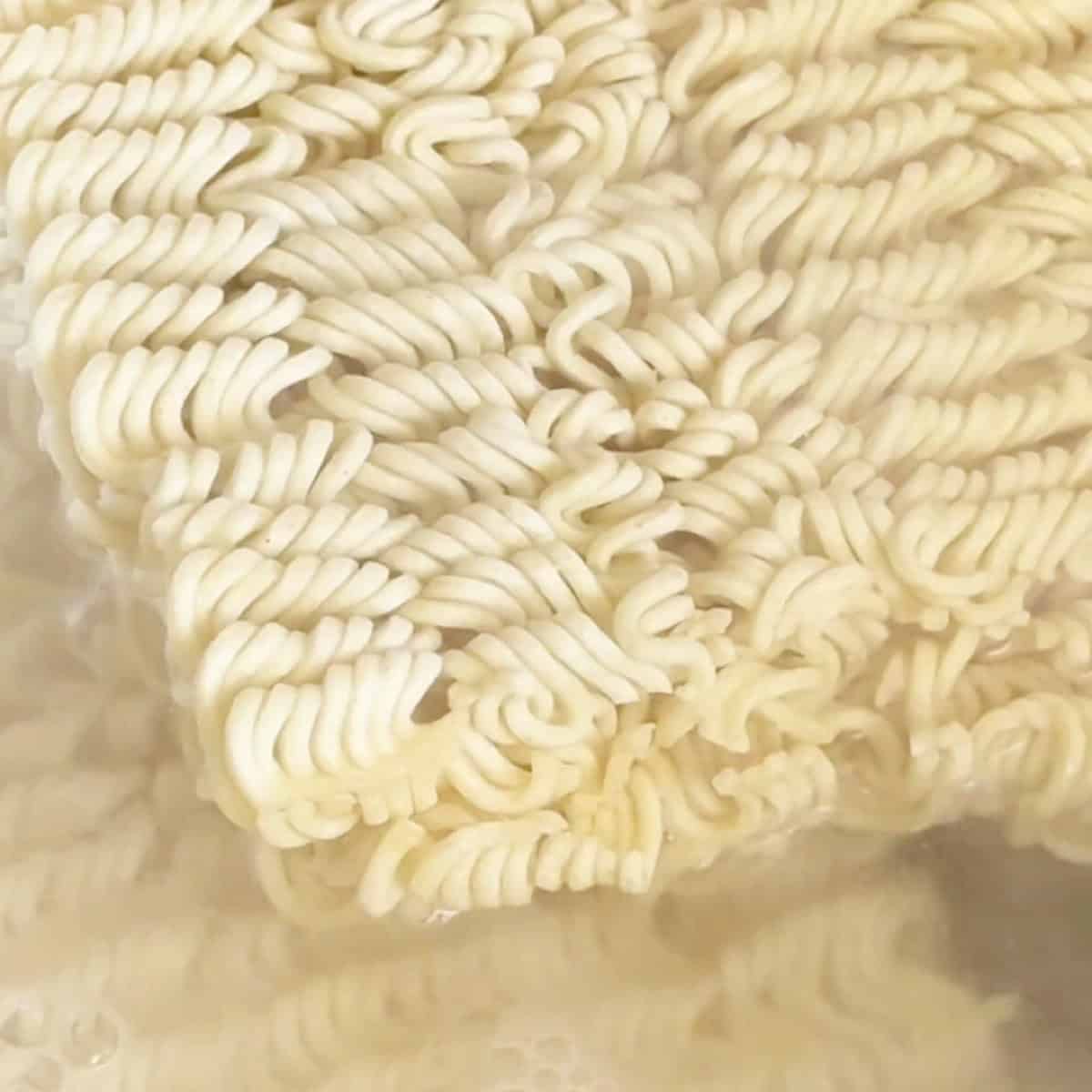
Cook the ramen according to the package directions, stopping as soon as the noodles are tender. Drain them well. Don't intentionally overcook them to make them softer because they'll cook briefly again when they're tossed with the sauce.
Different styles of ramen cook at different rates, so the package timing matters more here than a universal cooking time.
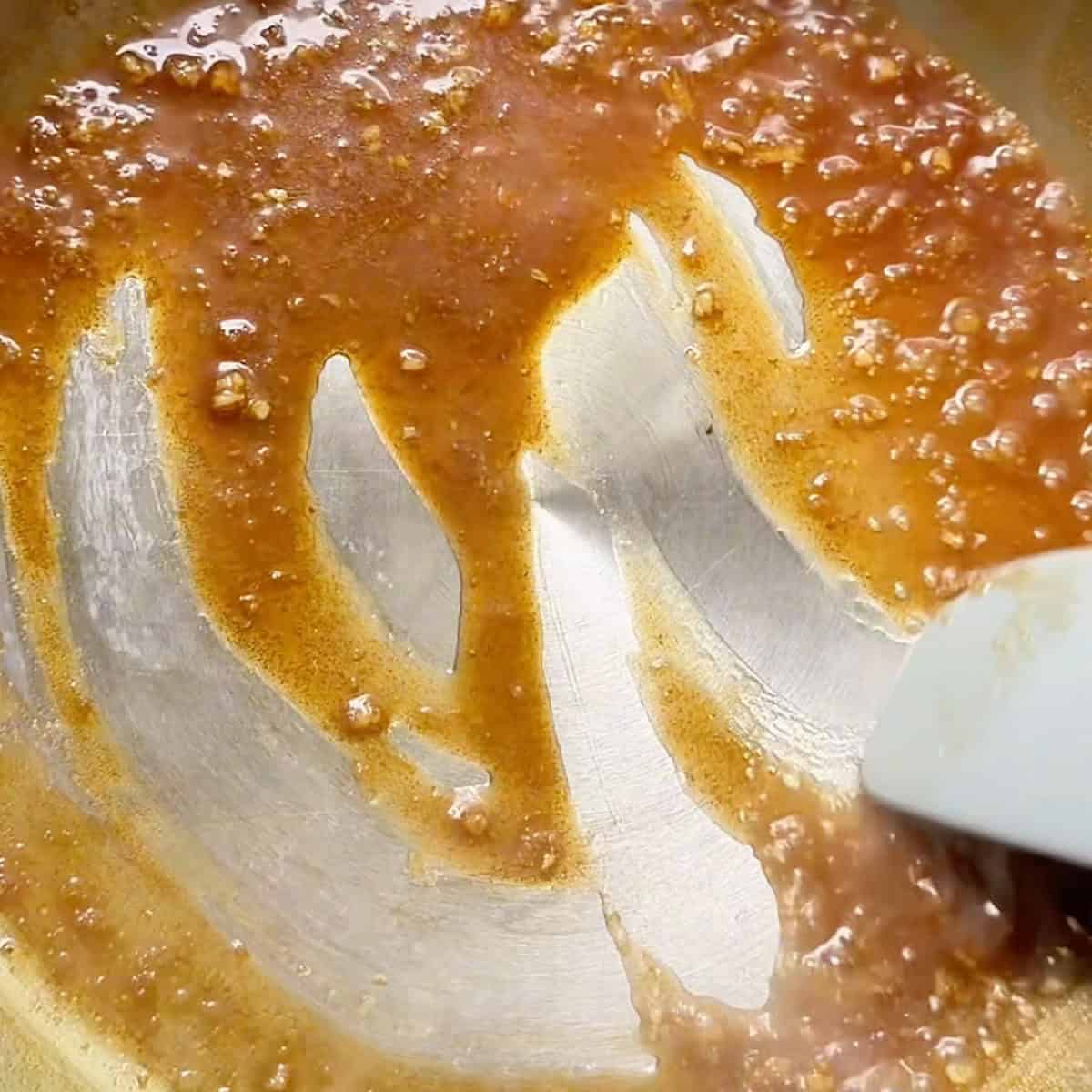
STEP THREE: Build and Reduce the Garlic-Ginger Sauce
Heat a teaspoon of neutral oil in a large skillet over medium heat. Add the minced garlic and grate the fresh ginger directly into the pan. Stir for about 30 seconds, just until fragrant, then add the chicken broth and soy sauce.
Bring the mixture to a gentle simmer and let it reduce for 3 to 5 minutes. You want less liquid in the skillet, but don't take it so far that the pan becomes dry.
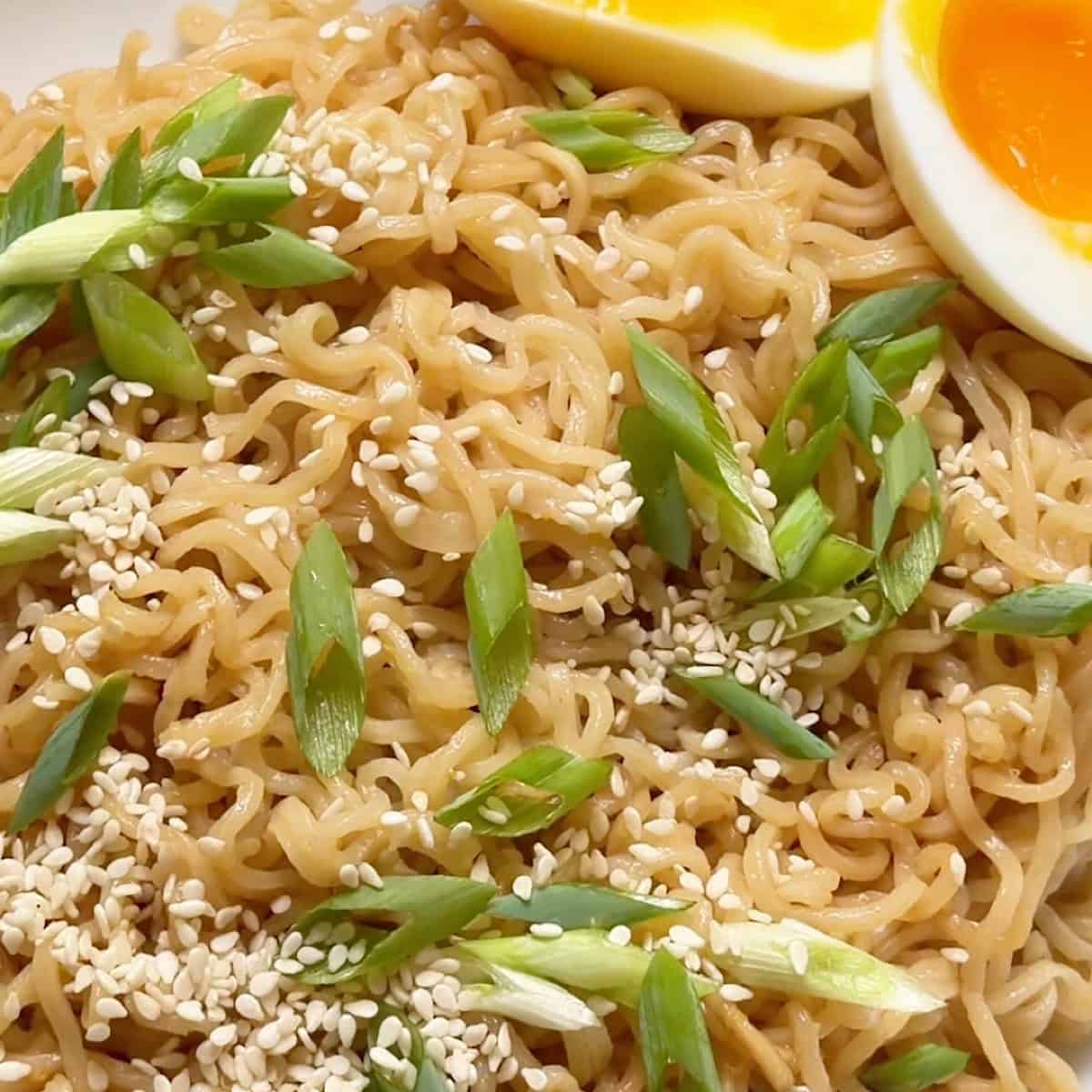
STEP FOUR: Toss and Finish the Ramen
Add the drained noodles and toss gently until coated. Cook for another 1 to 2 minutes, until most of the remaining liquid has reduced and the noodles look glossy rather than wet.
Remove the skillet from the heat before adding the toasted sesame oil. Transfer the noodles to one serving bowl or divide them between individual bowls. Finish with the halved egg, sliced green onions, and sesame seeds.
Save This Recipe 💌
Expert Tips for Success
👩🍳Jami's Pro Tips: Want to take this recipe to the next level? Check out my expert tips below for the best flavor, texture, and meal prep hacks!
✔️ DO Sauté the garlic and ginger first. About 30 seconds in the oil is enough to release their flavor before the liquid goes into the skillet.
✔️ DO Reduce the broth before adding the noodles. This is what turns the broth and soy sauce into a light coating rather than leaving the ramen soupy.
❌ DO NOT Add the sesame oil too early. Stir it in after removing the skillet from the heat to retain more of its toasted flavor and aroma.
Storage
Store leftover ramen noodles in an airtight container in the refrigerator for up to 3 days. Refrigerate cooked eggs separately when possible and don't freeze the assembled ramen, since the noodles can become soft after thawing. Reheat the noodles gently in a skillet or microwave with a splash of broth or water to loosen the sauce.
Garlic Ginger Ramen recipe FAQs
Yes. Instant ramen is one of the easiest options for this recipe. Use the noodles and discard the seasoning packet, then make the garlic-ginger sauce with chicken broth, soy sauce, fresh ginger, and garlic instead. Rice ramen can be prepared the same way.
The chicken broth is intentionally reduced before and after the noodles are added. Instead of serving the ramen in broth, the reduced liquid creates a savory garlic-ginger sauce that lightly coats the noodles. Stop reducing when the noodles look glossy and there isn't excess liquid pooling in the skillet.
More asian Recipes You'll Love ♥️

Did You Try This Recipe?
Leave a ⭐️⭐️⭐️⭐️⭐️ rating and comment below. Don't forget to share it on Instagram, Facebook, & Pinterest. Thank you! 💛
📖 Recipe
Garlic Ginger Ramen with Eggs
Equipment
- Small saucepan
- Medium saucepan
- Large skillet
- Microplane or fine grater
- Tongs
Ingredients
- 2 large eggs
- 2 portions ramen noodles, about 5 ounces total, instant or rice ramen (if using instant ramen, discard the seasoning packets)
- 1 teaspoon neutral cooking oil
- 1 small garlic clove minced
- ½ teaspoon finely grated fresh ginger
- 1 cup chicken broth prepared from bouillon according to package directions
- 1 tablespoon soy sauce
- 1 teaspoon toasted sesame oil
- 2 green onions thinly sliced
- 1 teaspoon sesame seeds
Instructions
- Bring a small saucepan of water to a boil. Using a spoon, gently lower the eggs into the boiling water. Cook for 8 minutes for medium-boiled eggs with slightly soft centers or 11-12 minutes for hard-boiled eggs.
- Transfer the eggs immediately to a bowl of ice water and let cool for 5 minutes. Peel and cut in half.
- Meanwhile, cook the rice ramen noodles in boiling water according to the package directions. Take care not to overcook them, since they will finish briefly in the skillet. Drain well and set aside.
- Heat the oil in a large skillet over medium heat. Add the minced garlic, then use a Microplane or fine grater to grate the fresh ginger directly into the skillet. Cook for about 30 seconds, stirring constantly, just until fragrant. Don't let the garlic brown.
- Pour in the chicken broth and soy sauce. Bring to a gentle simmer and cook for 3-5 minutes, or until the liquid has reduced slightly and the flavors are concentrated. The skillet should still contain enough liquid to coat the noodles. Don't reduce it completely.
- Add the drained ramen noodles to the skillet. Toss gently with tongs until the noodles are evenly coated.
- Continue cooking for 1-2 minutes, tossing occasionally, until most of the remaining liquid has been absorbed or reduced into a light sauce that clings to the noodles. Remove the skillet from the heat and toss with the toasted sesame oil.
- Transfer the noodles to a serving bowl or divide between individual bowls. Top with the halved eggs, sliced green onions, and sesame seeds. Serve immediately.
Save This Recipe 💌
Video
Notes
- Sauté the garlic and ginger just until fragrant before adding the broth.
- Let the broth and soy sauce simmer for several minutes before adding the noodles.
- Drain the ramen while it's still tender and springy so it doesn't become too soft in the skillet.
- Add the toasted sesame oil after removing the skillet from the heat to preserve its flavor.



Jami Powell says
Quick, easy, delicious, low-budget, and weeknight-friendly!